Where We Find Water in Europe (and Dump the Rest)
August 13, 2026 · roadlifer
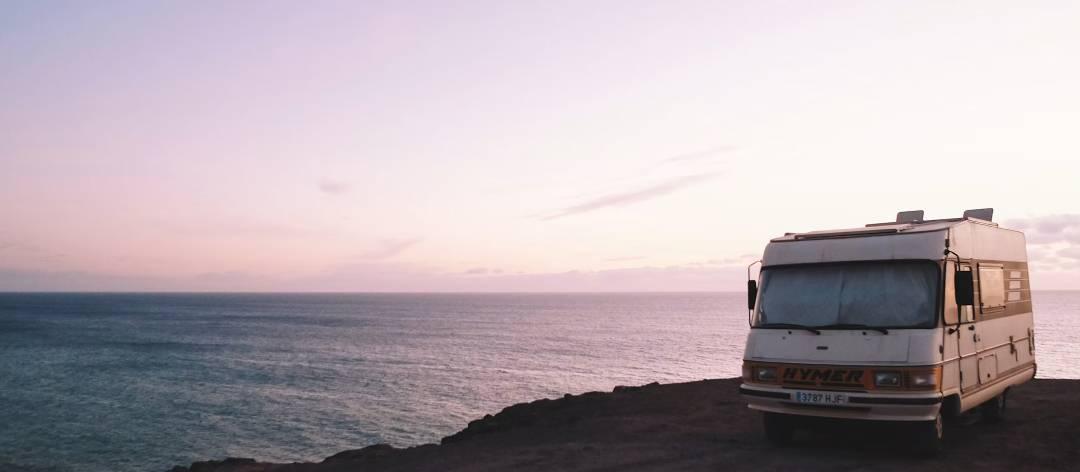
Water quietly sets your schedule in a campervan. Here's where we fill up across Europe, from aires and fuel stations to marinas and village fountains, the kit that makes it painless, and how to get rid of grey and blackwater without ruining a spot for everyone else.
Nobody dreams about van life because of the water tank. But once you're actually out there, water is the thing that quietly sets your schedule. Fill up, and you've bought yourself four or five days of freedom. Run low, and suddenly every decision about where to drive is really a decision about where the next tap is.
The good news: filling and emptying gets easy fast, once you know the handful of places that reliably work in Europe. Here's where we look, in the order we look.
Know your three tanks
Three separate things get confused constantly, and mixing them up is how people end up doing something they really shouldn't:
- Fresh water is what you drink, cook and wash with. Filling it is the errand you do every few days.
- Wastewater (grey water) is what runs out of the sink and shower. Soapy, harmless-looking, and still not something to tip in a ditch.
- Blackwater is the toilet. It goes in one place only: a proper blackwater point or a public toilet, depending on what kind of loo you have.
On the Roadlifer map these are three different place types for exactly that reason. A spot with a tap doesn't necessarily take your waste, and a service point that takes waste doesn't always have drinking water.
Where we actually fill up
In rough order of how often we use them:
- Motorhome service points and aires. The purpose-built option. Fresh water, wastewater and blackwater in one place, usually for a small fee or free with an overnight stay. France, Germany and Italy are covered in these. When one is nearby, that's the whole errand solved in ten minutes.
- Campsites. Many will let you fill and empty for a few euros without staying the night. Just ask at reception instead of rolling straight up to the service bay, since being the van that sneaks in is how campsites stop offering it.
- Fuel stations. Very common across southern Europe, and often free if you're buying diesel. Look for a tap by the air and water station, and ask inside whether it's drinking water.
- Rest areas and picnic sites. Plenty of them have a tap, and in the Nordics they're often signposted with drinking water and a toilet. They're already a natural stop on a long driving day, so it costs you nothing extra.
- Public taps, fountains and village squares. Especially in Italy, Spain and the Alps, where drinking fountains run all day. Look for the wording that says it's fine to drink: eau potable, agua potable, acqua potabile, Trinkwasser. And the ones that say it isn't: eau non potable, kein Trinkwasser.
- Marinas, harbours and sports halls. Marinas nearly always have a hose for boats and will usually say yes if you ask.
- Tourist offices, campsite-adjacent car parks, mountain huts. Worth asking. In our experience people say yes far more often than they say no.
The kit that makes it painless
Filling up is only annoying if you're missing something. What lives in our water box:
- A food-grade hose, kept in its own bag so it never touches the wastewater gear.
- A set of tap adapters. This is the one that saves the day: European taps come in a dozen different threads, and half the ones you meet have no thread at all.
- A collapsible 10 litre canister for taps you can't park next to, which is more of them than you'd think.
- A watering-can style attachment or a short length of hose that fits over a fountain spout.
- A cheap inline filter, and separately, a bottle of tank cleaner every couple of months.
Total cost of all of it is less than one night in a mid-range campsite, and it's the difference between "there's a tap, great" and "there's a tap, and I can't connect to it."
Getting rid of it, properly
Blackwater goes to a blackwater point, a campsite service bay, or, for a cassette toilet, a public toilet where you can empty and rinse discreetly. Never a storm drain, never a bush, never at a viewpoint, no matter how far you are from anything. One person doing that is enough to get a whole area closed to campers, and it's the fastest way to make locals hate everyone who comes after you.
Wastewater deserves more care than it usually gets. It looks like nothing and it's full of soap, grease and food. Put it in a proper drain. If you're somewhere without one and you have no choice, use biodegradable soap, strain the food out first, and pour it well away from any watercourse. That's a last resort, not a plan.
We wrote out the rest of the unwritten rules here: wild camping etiquette.
Stop hunting, start planning
The real trick isn't knowing the list above. It's not needing it, because you already know where the next water point is before the tank gets low.
That's how we use Roadlifer: water, wastewater and blackwater points sit on the same map as the places to sleep, so filling up stops being a separate errand and becomes part of choosing the day's route. You see what's along the way, with reviews telling you whether the tap is actually potable and whether it's still working, then you pick a spot for the night nearby.
One habit that removes the stress entirely: top up whenever you're near a tap and below half a tank, even if you don't need it. Water is free almost everywhere, and a full tank buys you the freedom to stay somewhere beautiful an extra two nights instead of driving back to town.
And when you find a tap that isn't on the map yet, add it. Water points are the single most useful thing you can contribute, because the next person is going to need one exactly where you're standing. Safe travels, and see you out there.